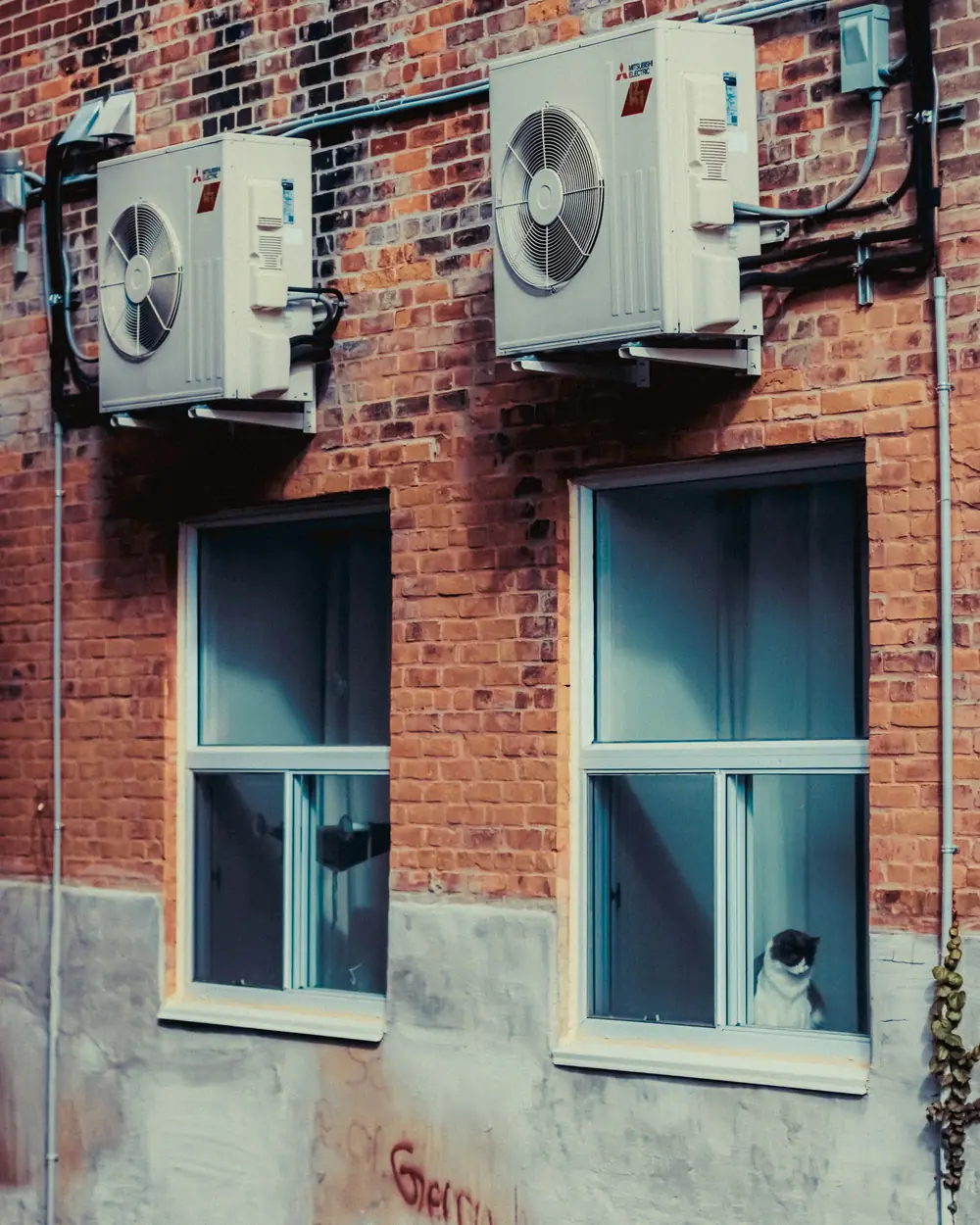
When an apartment building needs new HVAC, owners usually end up choosing between packaged terminal units (PTACs or PTHPs) and ducted or ductless split systems. Neither is always better. Here's how they compare on the points that matter to owners and maintenance teams.
Quick comparison
| PTAC / PTHP | Split system | |
|---|---|---|
| Installation | Through-wall sleeve, no ducts, no indoor closet | Outdoor condenser plus indoor air handler, line set, and usually ducts |
| Repair speed | Fast. Swap the chassis from spare stock | Needs on-site diagnosis and parts |
| Comfort & noise | Louder, conditions one room or zone | Quieter, whole-unit distribution |
| Humidity control | Fair | Generally better when sized correctly |
| Efficiency | Lower. PTHP versions help with heating | Generally higher |
| Looks | Visible wall grille and indoor unit | Mostly hidden (ducted) |
When PTACs make sense
- Buildings that already have wall sleeves (replacing like-for-like is simple)
- Studios, senior living, extended-stay, and room-by-room control
- Properties that put a premium on fast repairs and simple maintenance
When split systems make sense
- Larger units with multiple bedrooms
- Repositioning projects aimed at higher rents and a quieter living experience
- Properties where humidity complaints are a problem
The Memphis factor: humidity
In the Mid-South, moisture removal matters as much as temperature. PTACs can leave rooms feeling damp, especially when they're oversized. If residents complain about clamminess or musty smells, factor that into the decision.
Maintenance either way
Both types need clean filters, clear drains, and clean coils. For PTAC buildings, a spare-chassis program keeps turns on schedule. For split-system buildings, a unit-by-unit equipment list helps you plan replacements. See PTAC service and multifamily HVAC.